Baoquan Via Ferrata Guide for First-Time Visitors
Most English-language references to Baoquan Via Ferrata stop at “it is exciting” or “it is a cliff activity inside Baoquan.” That is not enough to plan the day well.
The recent Xiaohongshu notes are much more useful because they repeat the same practical questions:
- should you choose phase 1 or phase 2
- should a first-timer start with the experience line or the challenge line
- how long does it really take when queues and photo stops are included
- can you combine Via Ferrata with Baoquan Scenic Area in one day
- is the reverse route actually smarter than the normal uphill flow
This page answers those questions in guide format so the route can be planned before arrival rather than improvised at the cliff entrance.
What Baoquan Via Ferrata Actually Is
Baoquan Via Ferrata is a managed cliff activity inside the upper Baoquan system, usually associated with the 崖天下 side rather than the lower Grand Canyon walk.
In practical terms, visitors describe it as a protected route that can include:
- fixed metal steps or narrow footholds
- clipped safety systems that you move along yourself
- steel cable traverses
- short bridge or single-line crossing sections
- cliff-face movement with big visual exposure
- in phase 2, multiple zipline segments
This is why Baoquan Via Ferrata sits in a different category from a glass bridge or a scenic hanging walkway. You are not just looking at the drop. You are participating in the movement through it.
Is Baoquan Via Ferrata Worth It?
Across the source notes, the answer is usually yes for travelers who want a real activity instead of only a scenic viewpoint day.
Why people think it is worth doing:
- it feels much more immersive than a standard lookout platform
- it creates the strongest “I really did something here” memory inside Baoquan
- the cliff background is highly photogenic without needing technical climbing experience
- first-timers repeatedly say the activity feels accessible once they understand the route format
Why it is not for everyone:
- if your priority is a relaxed canyon day, the activity can dominate the whole schedule
- if you dislike handling clips or moving on exposed footholds, the challenge line may feel mentally tiring
- if you arrive late on a busy day, the queues and slow-moving photo traffic can dilute the experience
The main takeaway is that Baoquan Via Ferrata is usually worth it when it is treated as the core event of the day, not a casual extra added after already exhausting yourself on scenic walking.
Phase 1 vs Phase 2: The Most Important Choice
The strongest repeated distinction in the notes is not just “easy versus hard.” It is that phase 1 and phase 2 feel different even when both are booked as challenge lines.
Phase 1
Phase 1 is the line more visitors describe as the better pure climbing experience.
Repeated themes for phase 1:
- more rock-face movement
- more sections that feel exposed and physically engaging
- longer route feel
- stronger “classic Via Ferrata” identity
- better scenery according to multiple visitors
- more demanding on arm confidence, body control, and stamina
Several notes also mention that phase 1 contains internal route choices where some sections are steeper or more effort-heavy than the gentler bypass, which makes it feel more interactive and more interesting for people who want challenge rather than novelty.
Phase 2
Phase 2 is the line most often described as more beginner-friendly and more entertainment-oriented.
Repeated themes for phase 2:
- lighter overall difficulty than phase 1
- three zipline segments on the challenge line
- faster finish time when the route is not clogged
- easier entry point for first-time Via Ferrata visitors
- dramatic and fun, but sometimes described as less “substantial” than phase 1
Phase 2 seems to appeal most to visitors who want a visually strong cliff activity but do not necessarily want the heavier climbing emphasis of phase 1.
Challenge Line vs Experience Line
The first-timer decision inside each phase is usually whether to stay with the experience line or continue into the challenge line.
The notes suggest the following pattern:
- the experience line is short and suitable for cautious first-timers
- the challenge line includes the experience section and continues into the more serious route
- the challenge line is where the memorable cliff and bridge sections really begin
- travelers who are height-sensitive but curious often use the experience line as a test
One recent note reports phase 2 at roughly:
- experience line: about 200 meters
- challenge line: about 800 meters
Those exact numbers should be treated as on-site operational guidance rather than permanent official specs, but the structure is useful: experience is a short sampler, challenge is the real activity.
Is Baoquan Via Ferrata Hard?
For most healthy first-timers, the activity sounds more mentally demanding than technically difficult.
The recurring difficulty factors are:
- comfort with height
- willingness to move one clip at a time without panicking
- balance on narrow footholds or cables
- patience when another participant is moving slowly ahead of you
- enough stamina to stay composed instead of rushing
What the notes do not suggest is that this requires previous rock-climbing experience. What they do suggest is that people who freeze under exposure should not assume the challenge line will feel like a normal scenic walk.
Who Should Start with Phase 2
Phase 2 is often the safer first choice if you are:
- doing Via Ferrata for the first time
- interested in photos and novelty more than pure route difficulty
- traveling with friends who have mixed confidence levels
- unsure how strongly you react to exposed cliff movement
Who Should Start with Phase 1
Phase 1 is often the better choice if you are:
- specifically coming for the climbing experience
- comfortable with stairs, ladders, and bodyweight movement
- disappointed by activity products that feel too short or too packaged
- trying to choose only one line and want the stronger route value
Local Tip
The source notes suggest that many visitors do not regret doing phase 2 first, but several do imply that if you only have time for one challenge line and want the most substantial route, phase 1 is the stronger bet.
How Long Does Baoquan Via Ferrata Take?
This is where traveler reports are more useful than brochure expectations.
The notes repeatedly show a big gap between ideal route duration and real-world duration.
Reported patterns include:
- phase 2 challenge can move in around 50 to 60 minutes when flow is clean
- the same route can stretch close to two hours when photo stops or bottlenecks build up
- phase 1 challenge often takes longer than phase 2
- a combined “do both phases” day can easily consume most of the upper-zone schedule
This matters because many people underestimate how much time is lost in these stages:
- reaching the Via Ferrata area through the upper Baoquan transport chain
- storing bags or unnecessary items
- gearing up and listening to the instructions
- waiting behind photo-heavy groups
- walking onward to the next ride or scenic section afterward
Real Timing Rule
For planning purposes:
- reserve at least half a day for one challenge line plus normal Baoquan movement
- reserve most of a full day if you want both phases or one phase plus several upper-zone rides
- do not trust “one hour” unless you are entering early and deliberately avoiding photo congestion
The Best Route Strategy Inside Baoquan
The 2025 notes give one especially useful planning insight: reverse or counter-clockwise routing can make the day much cleaner for Via Ferrata travelers.
The logic works like this:
- enter early
- go by the Grand Canyon-side bus and L-shaped cave elevator
- reach phase 2 earlier than the main uphill crowd
- finish before the queue thickens
- keep the rest of the upper zone flexible
One detailed note describes using this logic to reach phase 2 by about 9:30 and complete it by about 10:30 with no queue, then do scenic sections, and then reach phase 1 later in the afternoon with similarly manageable waiting.
That is a much better planning model than blindly following the default uphill crowd.
Standard Uphill Route vs Reverse Route
Standard Uphill Route
This is the easier route to understand because it follows the more obvious visitor flow toward the upper zone.
Why people use it:
- less thinking before arrival
- intuitive for first-time Baoquan visitors
- suits travelers who are already committed to an upper-zone activity-first day
Why it can fail:
- more overlap with the normal crowd wave
- higher chance of reaching the activity after lines form
- slower if you also want other upper rides
Reverse Route
This is the more tactical option.
Why it gets praise:
- earlier access to the activity area
- lower queue pressure
- cleaner photo conditions
- better chance of combining the activity with scenic walking without panic
For travelers who care about efficiency, the reverse route may be the single best practical insight in the Baoquan Via Ferrata discussion.
Can You Do Phase 1 and Phase 2 in One Day?
Yes, several recent notes suggest it is possible, but only if the whole day is structured around that goal.
The conditions that make it realistic:
- arrive very early
- keep the route efficient
- accept that some other upper rides may need to be dropped
- avoid turning every section into a photo shoot
- keep your energy stable and your carried items minimal
The conditions that make it a bad idea:
- you also want bungee, cliff swing, or cliff coaster with long queue tolerance
- you are visiting casually from late morning
- your group contains someone nervous enough to slow movement on every obstacle
Multiple notes effectively say the same thing: a “speedrun” day can work, but it stops being relaxed. If your goal is enjoyment rather than collecting activities, one challenge line plus selective scenic stops is often the better day.
Can You Combine Via Ferrata with Baoquan Scenic Area?
Yes, but you need to choose which side of Baoquan is the priority.
Best Combo for Most Travelers
The most realistic combination is:
- one Via Ferrata line
- a controlled upper-zone scenic block
- a lighter lower Grand Canyon segment if time and energy remain
This is supported by several notes where visitors say they came primarily for Via Ferrata but still realized the canyon zone deserved more time than expected.
Bad Combo Logic
The weakest plan is trying to do:
- both Via Ferrata phases
- bungee or cliff swing
- long upper-zone ride queues
- a full lower-canyon sightseeing loop
all in one casual day.
It may be physically possible on a very early start, but it is not the same thing as a well-paced visit.
What to Wear and Bring
The notes are unusually consistent on this point.
Bring or wear:
- shoes with dependable grip
- clothes with zipped pockets if you insist on carrying a phone
- a phone strap or wrist security if you plan to film
- very little extra weight
- enough water for a warm day
Do not assume you should carry a full backpack through the route. Several visitors explicitly mention that extra bags and unnecessary items become a nuisance, and some note that the site can handle bag transfer or storage arrangements around the activity area.
One repeated detail is that some harness setups include a small net pouch suitable for a bottle of water, which reinforces the broader lesson: pack light and keep hands free.
Bag Storage and Loose Items
The notes strongly suggest that:
- extra bags are often stored before the climb
- staff may help send stored items to the route exit area
- phones are the biggest loose-item risk because people want them for photos
This leads to a simple rule:
- if you do not need a phone for photos, keep the load minimal
- if you do need a phone, secure it deliberately rather than trusting your grip on an exposed section
Safety and First-Timer Friction
Baoquan Via Ferrata is a managed attraction, but it still contains real cliff exposure. The traveler notes make this clear even when written casually.
The main friction points for first-timers are not injuries in the notes. They are hesitation and confusion.
Examples that show up repeatedly:
- people slowing down while figuring out clip changes
- route pauses caused by photo-heavy groups
- participants underestimating how exposed narrow sections feel
- confusion at internal route-choice hardware when switching toward harder or easier options
That is why the best first-timer mindset is not “I need to be brave.” It is “I need to stay methodical.”
Is It Safe for First-Time Visitors?
It appears to be designed for first-timer participation, but only if you respect the operating method.
Practical guidance based on the notes:
- listen carefully during the initial instruction
- do not rush clip transfers
- do not overload your hands with extra items
- assume the biggest hazard is careless movement, not lack of strength
- do not pick the challenge line just because friends are doing it
Best Time of Day
The recent notes repeatedly reward early arrival.
Why early matters:
- cleaner route flow
- less waiting
- better light and less visual clutter in photos
- more flexibility to add scenic sections later
A few notes also describe morning mountain atmosphere, haze, or mist as part of the appeal. That suggests that early arrival is not only operationally better but sometimes visually better too.
Queue Reality
Baoquan Via Ferrata is one of those activities where queue conditions do not only affect waiting time. They affect route quality.
When the line is busy:
- you move at the pace of the slowest photo cluster ahead
- bridge or narrow sections become stop-start instead of fluid
- the activity feels more like staged checkpoint movement than cliff flow
That is why many of the best reports are not from the “bravest” visitors. They are from the visitors who got there before the crowd wave.
Photo Strategy
The notes show that Baoquan Via Ferrata is extremely photo-driven, but they also show how that can distort the route.
Best photo logic:
- do your cleanest posed shots before the hardest hesitation sets in
- keep stops short on narrow sections
- use phase 2 if zipline footage matters
- use phase 1 if cliff-route imagery matters more than novelty
One useful detail from the notes is that some operators may offer additional filming or drone-style add-ons on certain sections, especially around phase 2 zipline content. That should be treated as optional polish, not something essential to the activity.
Which Line Is More Photogenic?
The notes suggest:
- phase 1 is usually stronger for pure cliff-route imagery
- phase 2 is stronger for zipline-driven action moments
So the answer depends on whether you want “I am hanging on the mountain” photos or “I am flying through the canyon” footage.
Pricing Signals from Recent Notes
Recent traveler notes mention examples such as:
- phase 2 challenge around CNY 160 to 196 plus insurance
- phase 2 experience around CNY 66 plus insurance
- phase 1 challenge around CNY 168 plus insurance
These numbers should be treated as recent traveler signals rather than guaranteed permanent pricing.
The reliable planning conclusion is not the exact price. It is that:
- the activity is separately monetized from the base scenic area ticket
- insurance is commonly an extra line item
- media packages may also be sold separately
Ticket Strategy
Do not assume buying the Baoquan scenic ticket finishes the task.
The notes imply a layered purchase logic:
- scenic area access
- upper-zone route or zone access depending on the product structure
- Via Ferrata line purchase
- insurance
- optional photo or video package
This is exactly the kind of confusion that causes friction for independent travelers, so it is worth deciding in advance whether the day is scenic-first or activity-first.
Who This Activity Is Best For
Baoquan Via Ferrata is a strong fit for:
- couples who want a memorable shared challenge
- friends doing a focused adventure day
- travelers who like cliff walks, ladders, and exposure
- first-timers who want managed risk rather than technical climbing
It is a weaker fit for:
- travelers with strong fear of heights
- families trying to keep the day easy for children or older parents
- visitors with tightly fixed return times who cannot absorb queue variation
Suggested Baoquan Via Ferrata Itineraries
Option 1: First-Time Visitor, Lowest-Regret Plan
- Arrive early.
- Choose phase 2 challenge if you want a softer first entry.
- Keep baggage minimal.
- Finish the activity before late-morning crowd buildup.
- Add one controlled upper scenic segment.
- Decide afterward whether the lower canyon is still worth your energy.
Option 2: Stronger Adventure Plan
- Arrive early.
- Prioritize phase 1 challenge.
- Keep scenic stops secondary until the route is done.
- Use the upper area selectively after finishing.
- Skip long nonessential ride queues.
Option 3: Ambitious Two-Phase Day
- Enter near opening time.
- Use reverse routing to control queue exposure.
- Do phase 2 first if the access timing works cleaner.
- Use the midday window for scenic movement.
- Do phase 1 later only if energy remains strong.
- Accept that this is an efficiency day, not a relaxed sightseeing day.
Baoquan Via Ferrata with Zhengzhou or Xinxiang Access
For most international visitors, the route planning question starts before the cliff entrance.
If you are arriving from outside Baoquan, continue with:
- Zhengzhou to Baoquan Scenic Area
- Xinxiang to Baoquan Scenic Area
- Zhengzhou Day Trip to Baoquan
- Xinxiang Day Trip to Baoquan
If you are still unsure whether the day should center on scenic walking or cliff activities, read the broader Baoquan Scenic Area Guide first.
FAQ: Baoquan Via Ferrata
Is Baoquan Via Ferrata suitable for beginners?
Yes, especially if beginners choose the experience line or phase 2 first. The challenge line is still manageable for many first-timers, but it is much better for people who stay calm with height and follow the safety routine carefully.
Which is better, phase 1 or phase 2?
Phase 1 is usually better for a fuller climbing-style experience and stronger cliff scenery. Phase 2 is usually better for first-timers who want a lighter route with zipline payoff.
How much time should I budget?
Budget at least half a day for one challenge line once access, gearing up, queue variation, and upper-zone movement are included. If you want both phases, treat it as a near full-day upper-zone plan.
Can I do Baoquan Via Ferrata and the Grand Canyon in one day?
Yes, but only if you control the schedule. One Via Ferrata line plus selective canyon sightseeing is realistic. Two Via Ferrata phases plus a full canyon day is usually too much for a relaxed visit.
Should I arrive early?
Yes. Early arrival is one of the clearest repeated recommendations in the source notes because it improves queue conditions, photos, and overall route flow.
Visual Read
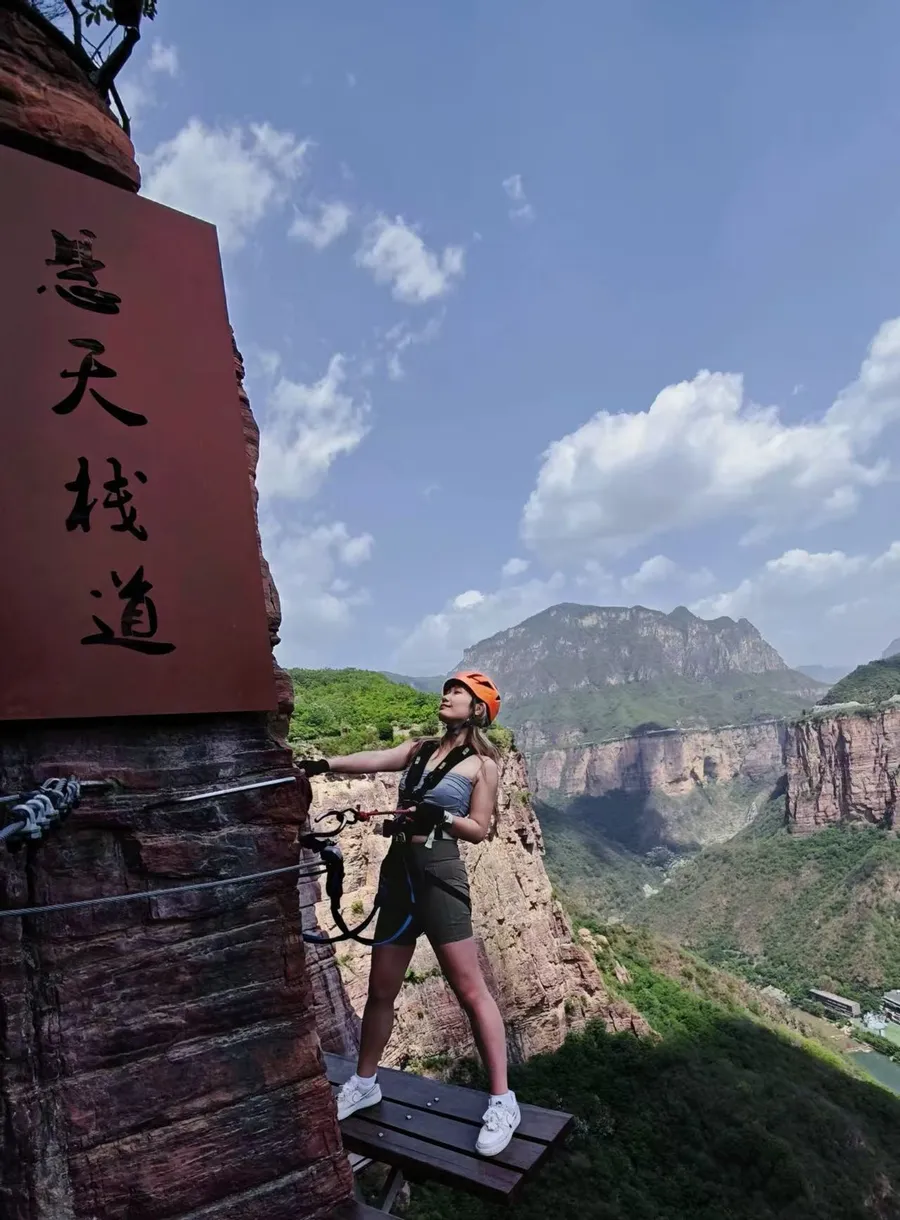
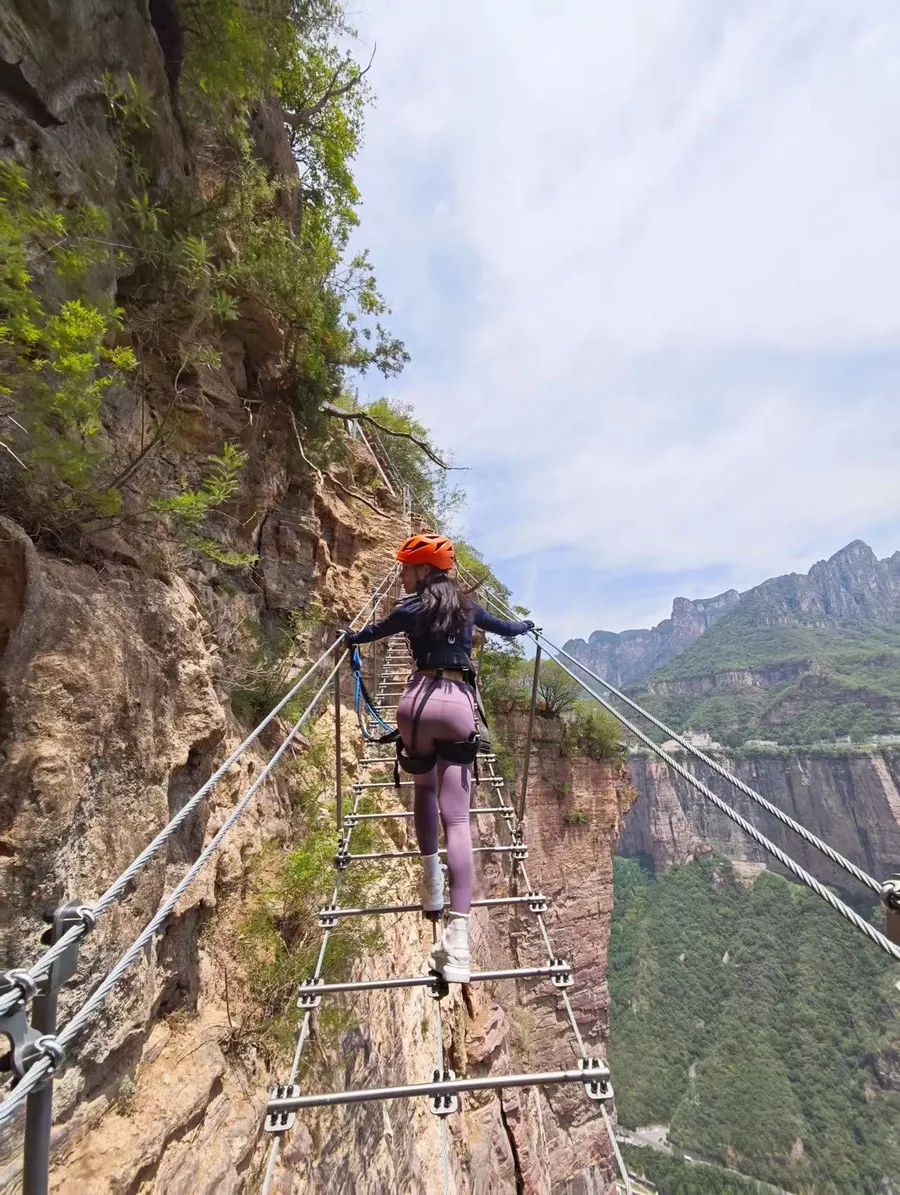
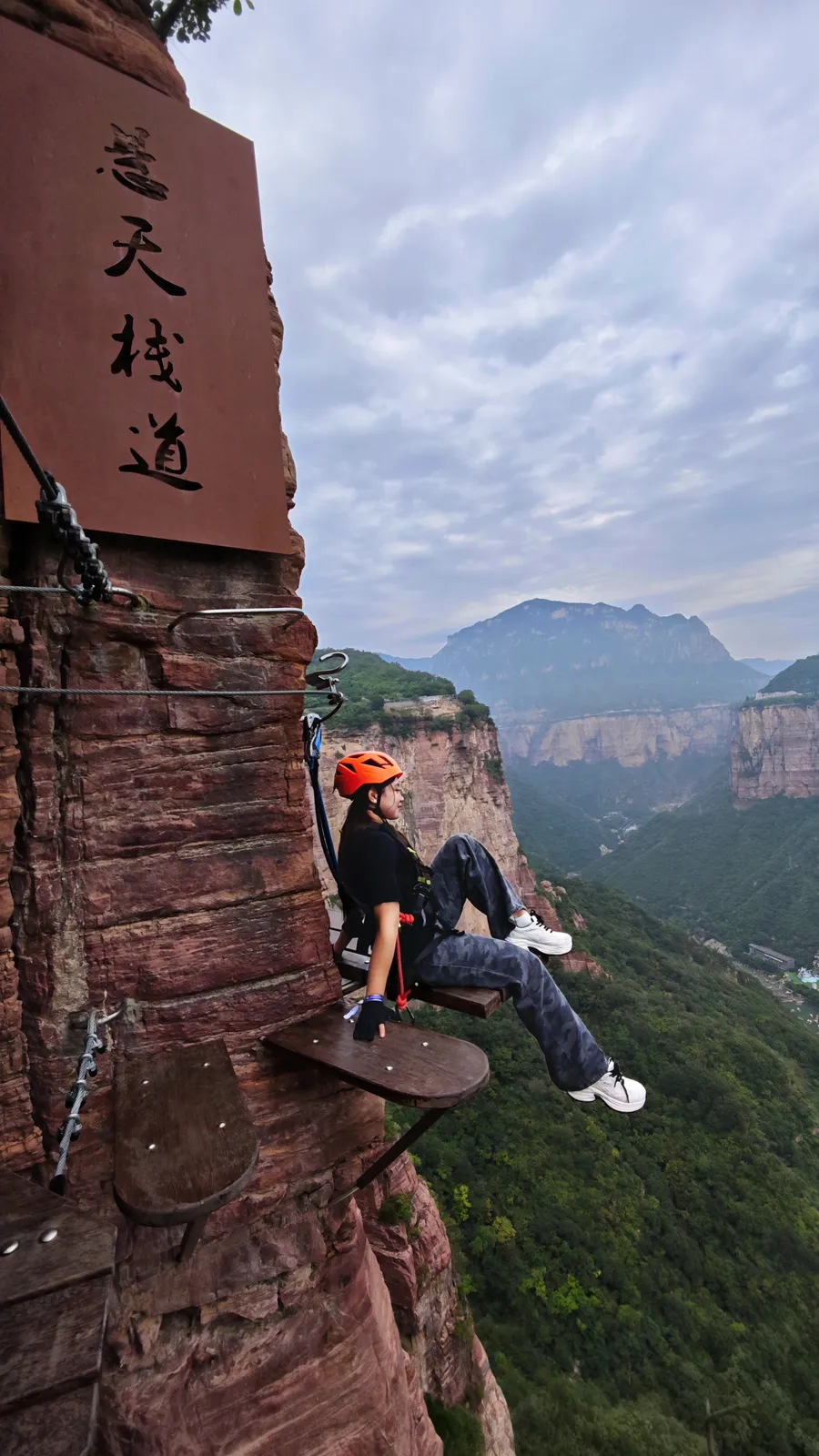
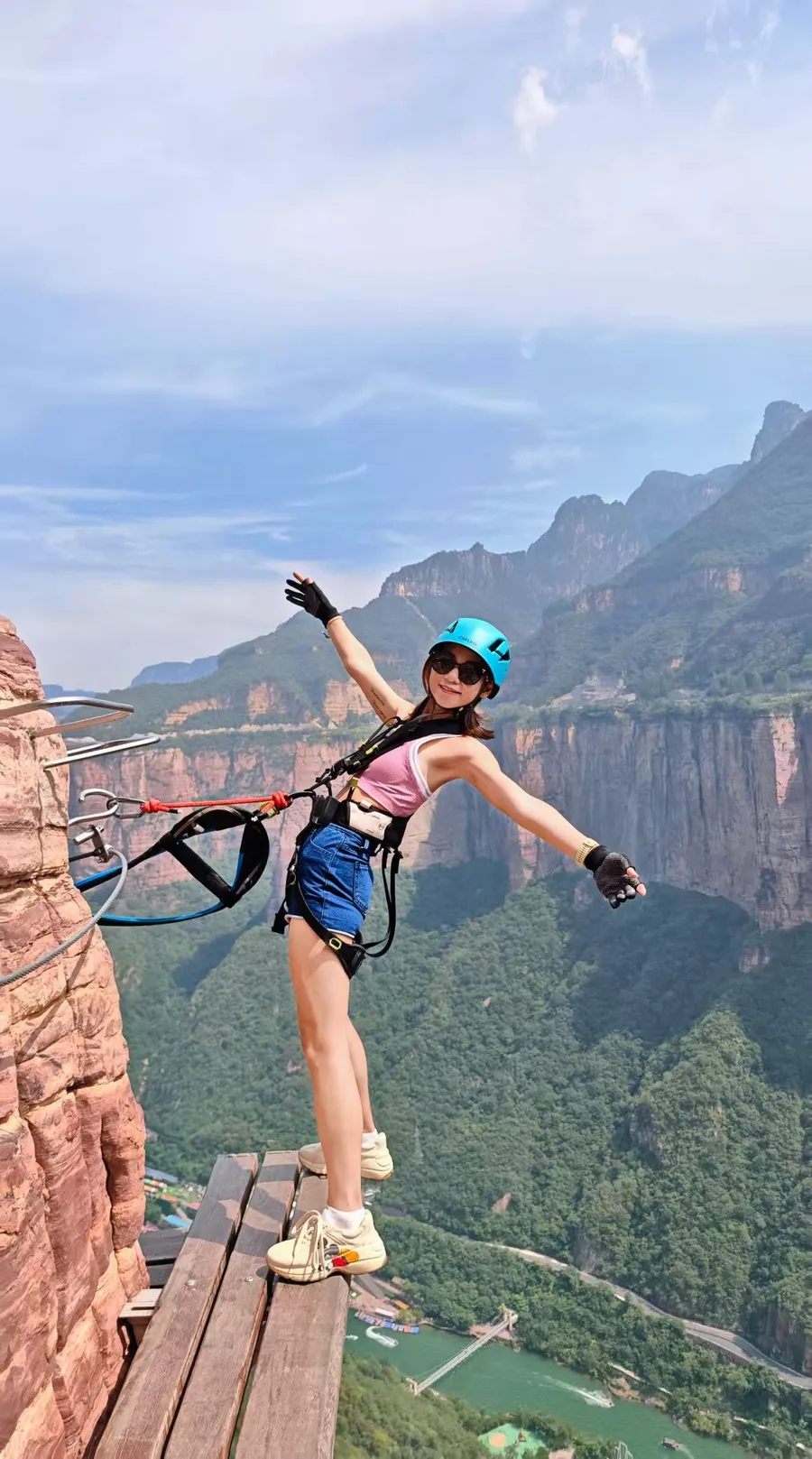
What Baoquan Via Ferrata Actually Looks Like
This gallery is intentionally placed near the end because many readers first want the planning logic, then the visual payoff. The stronger route images are weighted toward the lower part of the wall instead of being spent at the top.
Continue Planning Your Baoquan Day
- Baoquan Scenic Area Travel Guide
A detailed Baoquan Scenic Area guide for international travelers covering the two main zones, A line vs B line vs reverse route, how to get there from Zhengzhou or Xinxiang, what to expect with kids or older parents, where queues form, how to plan the cable car and elevator sequence, and how to turn a Baoquan visit into a better-structured day trip instead of a rushed checklist.
Want Via Ferrata Inside a Cleaner Baoquan Day?
If you want the cliff activity without turning the whole day chaotic, our Baoquan scenic-day service is the better next step: transfer pacing, scenic sequencing, and enough structure to decide whether Via Ferrata should be the core activity or just one part of the day.
Open Baoquan Scenic Day